Transforming healthcare
Craniosacral Therapists use a very skilled and highly-developed sense of touch to sense subtle movements in the body allowing them to very gently support the body to release and rebalance itself.
The results of this subtle treatment can be dramatic, benefitting the whole person and can often create very deep long-lasting therapeutic effects.
What does a session involve?
Your appointment begins with a brief conversation compiling your case history and what you’d like support with.
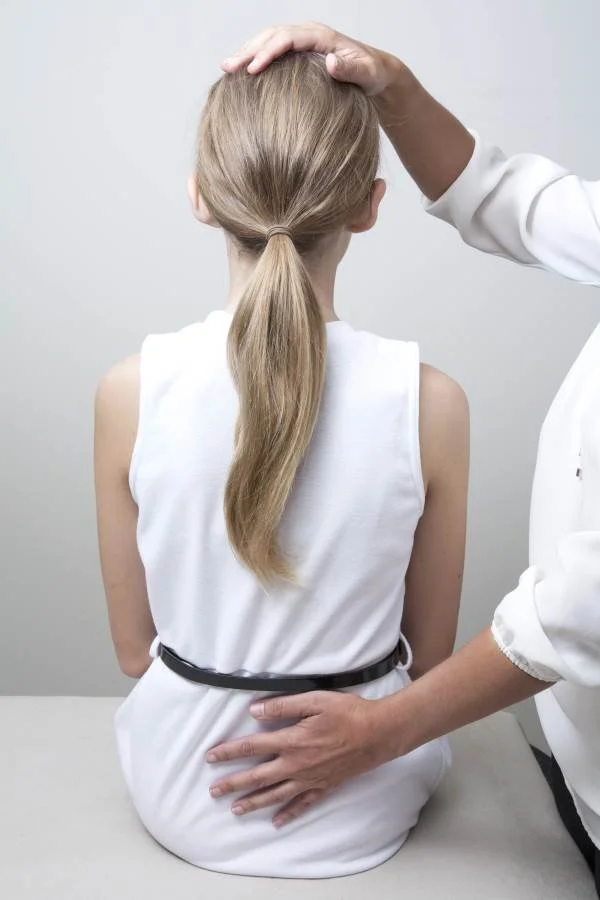
You’ll then be invited to lie fully clothed on a comfortable treatment couch and using gentle, light touch usually at the cranium, sacrum, trunk, or feet, I engage with your body’s subtle rhythms to observe areas of restriction, asymmetry and motion. There’s no manipulation or force involved.
Most people experience deep relaxation as they begin to become aware of the underlying health spreading through their body, allowing for a sense of integrated wellbeing to arise. At the end of the session, we’ll take a few moments to reflect before you leave.
Restoring Balance Across the Family Field
Working with the whole family is often important and invites a deeper sense of connection, balance, and harmony within what is a living, evolving system. Families are always in transition, and craniosacral therapy can offer a gentle, supportive space to navigate these changes together.
I’m passionate about bringing awareness to the fact that we are all part of a wider, interconnected dynamic. A living library of both our parents and ancestors.
When working with babies and infants, I often recommend that parents receive treatment. Our bodily systems are closely attuned to one another, and a child’s symptoms can sometimes reflect imbalances within the parent–child relationship. Supporting the wellbeing of the whole family can therefore create more lasting and meaningful change for all.
-
Fascial unwinding is a gentle, subtle process that allows the body to release restrictions held within the fascia; the connective tissue that surrounds and supports muscles, organs, and bones. Through light contact and careful listening, subtle movements may naturally arise as the body begins to soften and reorganise itself.
Rather than directing or forcing change, this approach creates space for the body to gently unwind in its own time. It can support a wide range of experiences from everyday sprains, strains and twists to historical scars, accidents and falls, emotional holding, and deep trauma patterns; often restoring a sense of ease, fluidity, and greater freedom within the body.
‘We see in the fascia the framework of life, the dwelling place in which life sojourns.’ - Andrew Taylor Still, founder of Osteopathy (1828-1917)
-
Intra-oral cranio-sacral therapy is a specialised, gentle technique that works inside the mouth to address tension in the jaw, palate, and surrounding structures. Using gloved hands and light touch, this approach can help release restrictions that contribute to feeding issues in newborns, jaw pain, TMJ dysfunction, headaches, dental tension, and facial discomfort.
As with all cranio-sacral work, the process is slow, respectful, and non-invasive, allowing the tissues to soften and rebalance without force.
Healing takes time
Natural healing takes time and is a process which requires committing to. It is an investment which can be transformational for both you and your family.
History
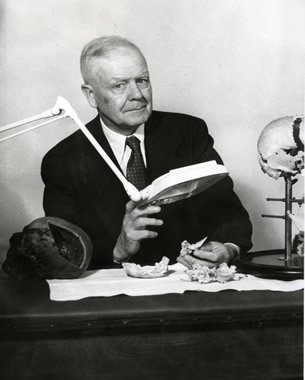
William Garner Sutherland, MD, DO
1873 - 1954
Craniosacral Therapy evolved from the cranial concept formulated by osteopath and medical doctor William Sutherland. While observing the bones of the cranium Sutherland made the observation that by design, the bones were created to move. Indicating that a subtle rhythmic motion is being expressed throughout the cranium and the body as a whole, affecting the body in both health and illness.
The work was latterly developed by Dr. Rollin E. Becker, DO (1910 - 1996), Dr. John E. Upledger, DO, OMM (1932 - 2012) and Dr. James Jealous, DO (1943 - 2021).